
AWS Launches Next-Gen AgentCore Runtime: Optimized for Elasticity and Consistent Cold Starts
Summary:AWS has announced the release of the next-generation AgentCore Runtime, a key update to Amazon Bedrock AgentCore designed to enhance the speed and resource efficiency of production-grade AI agents. This new version introduces dynamic memory management and snapshotting techniques to significantly optimize memory usage and cold start times, addressing traditional runtime pain points in resource allocation and startup latency. The update not only improves agent performance in complex tasks but also
### Next-Gen AgentCore Runtime: A Leap in Elasticity and Performance AWS has announced the release of the next-generation AgentCore Runtime, a significant update to Amazon Bedrock AgentCore designed to meet the demands of modern AI agents for speed, flexibility, and cost efficiency. Here are the key highlights of this update: #### 1. Dynamic Memory Management The new version introduces a smarter memory management system that reclaims memory as sessions release it, rather than holding it until the session ends. This improvement makes memory usage more efficient and avoids unnecessary resource waste. - **Benefits:** - Memory usage aligns with actual demand, reducing peak memory consumption. - Lower operational costs, especially for long-running agents. 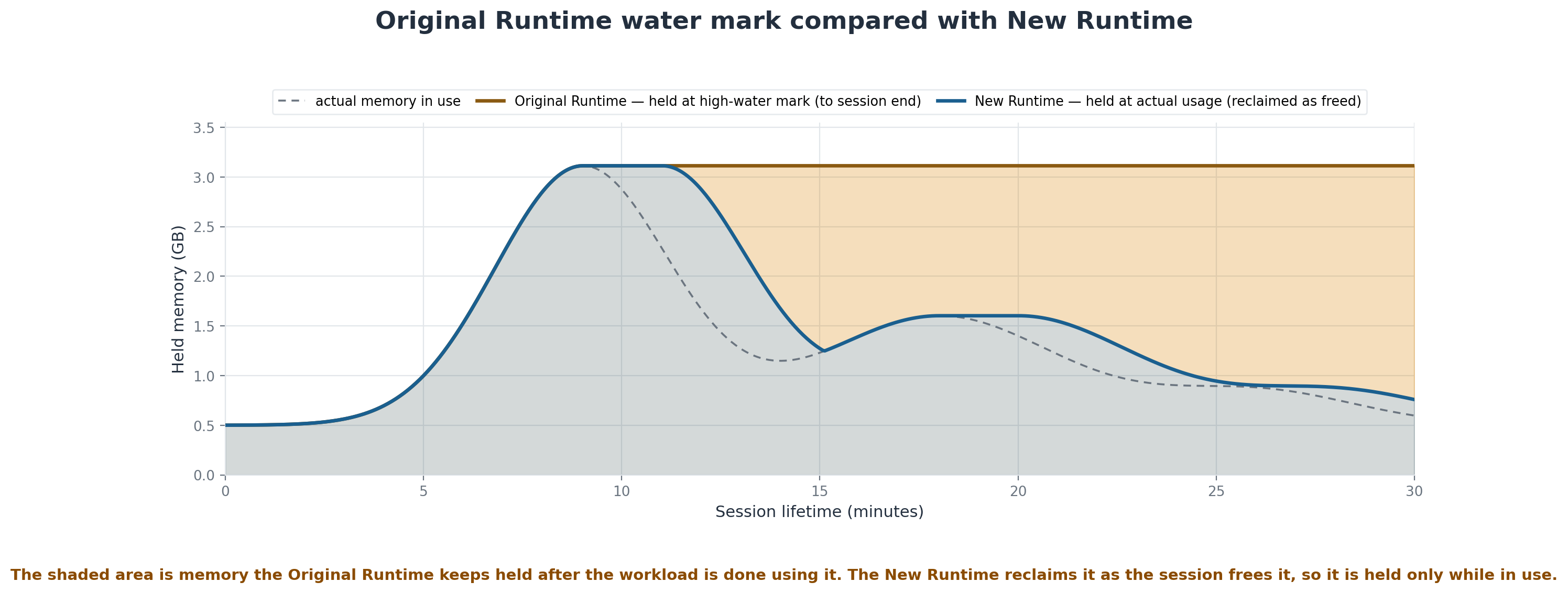 #### 2. Optimized Cold Start Times The new runtime uses snapshotting techniques to perform environment initialization once and reuse it for subsequent instance startups. This ensures that cold start times are no longer affected by container size or concurrency, remaining consistently low. - **Key Metrics:** - Cold start latency reduced from 5.4 seconds to nearly 30 seconds, down to about 2 seconds, regardless of image size. - Improved latency stability enhances user experience during interactions. 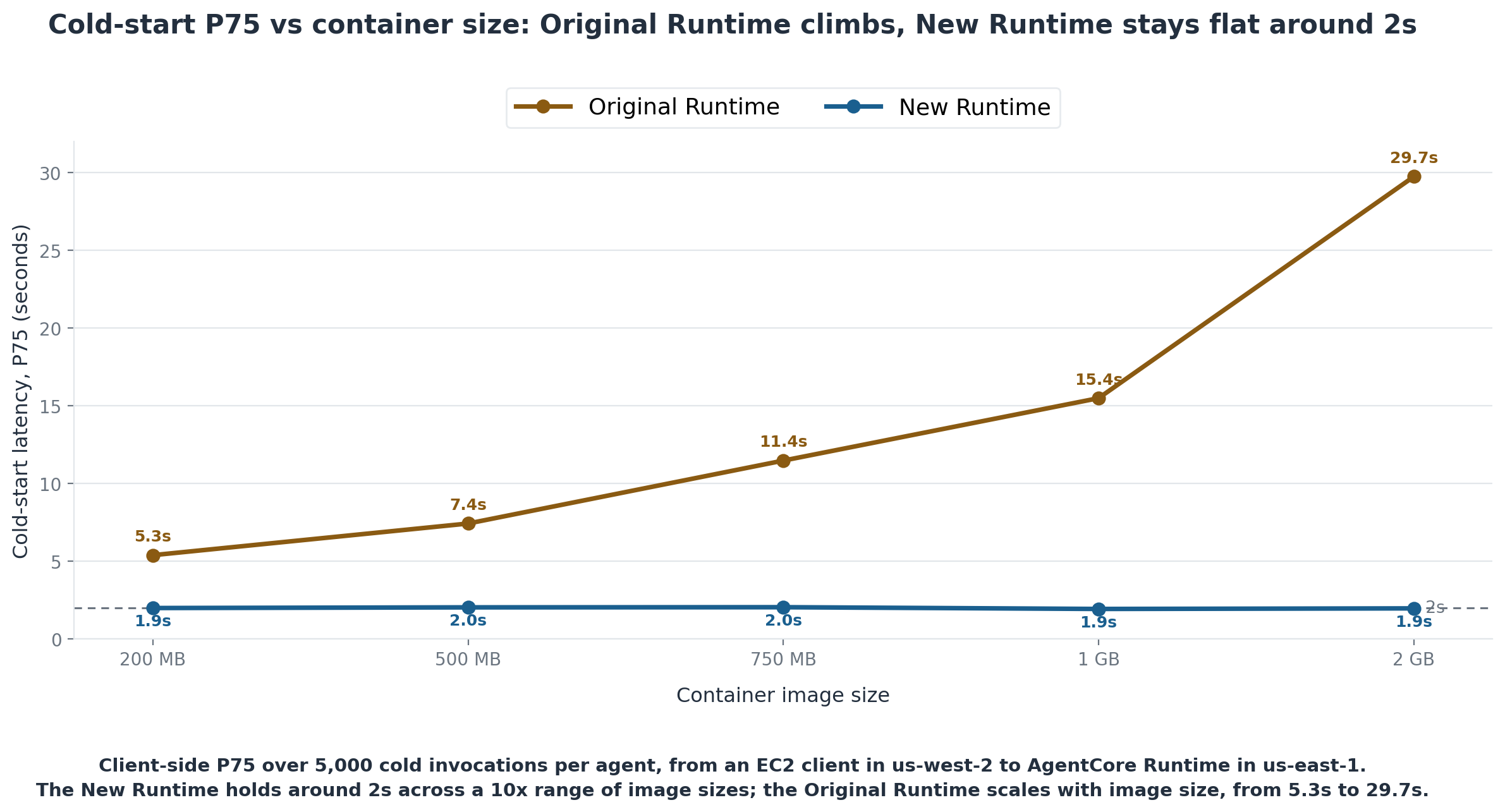 #### 3. Elastic Computing and Cost Optimization The new runtime adopts a pay-as-you-go model, charging only for the resources actually used, rather than for provisioned resources. This allows agents to scale flexibly during high load while remaining cost-effective when idle. - **Use Cases:** - Interactive agents: Fast response to user requests. - Long-running agents: Reduced continuous operation costs. ### Looking Ahead AWS plans to introduce additional features in the future, including: - **Committed Baseline Discounts**: Providing more predictable cost structures for consistently active agents. - **Larger Compute and Storage Support**: Meeting the needs of more complex agents. - **x86 Support**: Allowing existing x86 code and dependencies to be migrated to AgentCore as-is. - **Enhanced Lifecycle Control**: Supporting session suspension and resumption with memory snapshotting. - **Scoped Identity for Unattended Agents**: Providing finer-grained permission control for agents running without supervision. ### Recommendations for Developers Developers can start using the new runtime by setting the
platformVersion parameter to V2 when creating or updating a runtime. For more details, refer to the AgentCore Developer Guide. Additionally, the AgentCore GitHub samples repo provides examples and a load test example to help developers get started quickly.
---
> **Source**: [AWS Machine Learning Blog](https://aws.amazon.com/blogs/machine-learning/the-new-agentcore-runtime-elastic-optimized-and-consistently-fast-starts/) (2026-09-18)
— END —
Tags: #AWS #AgentCore #AI Agents #Elastic Computing #Cold Start Optimization
Editorial & Fact-Checking Note: This article is compiled from primary research, official release documentation, and source papers by the ZICQ Newsroom pipeline with automated entity verification and human editorial review. If you notice any technical inaccuracy, please submit a correction via our corrections policy or email our editorial desk directly.
Community Comments